


The Difference Between Cast and Calendered Vinyl
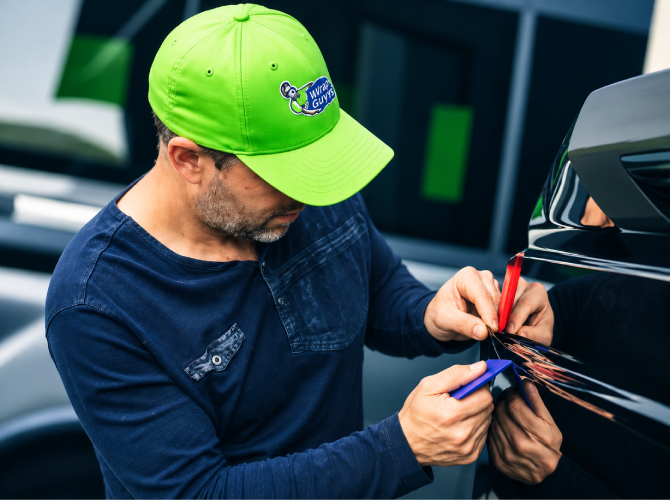
At Wrap Guys, we talk to business owners every day who want a great-looking vehicle wrap that works as hard as they do. When it comes to materials, understanding the difference between cast and calendered vinyl is one of the most important decisions in that process, because not all vinyl performs the same way on the road, and that gap shows up fast in your brand image.
Two Materials, Two Very Different Outcomes
The manufacturing process is where cast and calendered vinyl part ways, and it’s worth understanding because it explains everything that follows.
Cast vinyl starts as a liquid. That liquid is spread onto a casting sheet and cured slowly, allowing the molecular structure to fully relax. The result is a thin, dimensionally stable film that holds its shape under pressure, temperature changes, and years of UV exposure.
Calendered vinyl is manufactured by pushing solid vinyl through a series of heavy rollers to flatten it out. It’s faster to produce and less expensive, but those compressed molecules retain memory of their original form. Over time, they want to return to it.
That molecular memory is the root of almost every performance difference between the two.
How Each Vinyl Handles a Real Vehicle
Conformability on Complex Surfaces
Vehicles are full of compound curves, door handles, rivets, and body lines. Cast vinyl stretches slightly and conforms to those surfaces cleanly, which is why full vehicle wraps are designed around it. It lays flat, stays put, and doesn’t fight the installer.
Calendered vinyl is stiffer and better suited to flat or gently curved surfaces. On a full vehicle wrap, that stiffness creates real problems:
- Difficulty conforming around mirrors, door edges, and recesses
- Higher likelihood of lifting at edges over time
- Increased risk of bubbles and wrinkles during installation
- Greater installer time on corrections that cast vinyl simply doesn’t require
For the kind of work we do, using calendered vinyl on a full wrap would be like trying to gift-wrap a sphere with cardboard. The material just isn’t built for it.
Learn more about how wrap installers handle complex vehicle lines and curves.
Durability Over Time
This is where the ROI conversation gets real. Cast vinyl is built for long-term outdoor exposure. It resists UV fading, holds colour well, and maintains adhesion through Canadian winters and summer heat alike. That’s why we’re able to back our wraps with 5-year and 7-year warranties. The material makes that promise possible.
Calendered vinyl degrades faster in outdoor conditions. Fading, cracking, and edge lifting are common as the material ages and its internal tension works against the adhesive. A wrap that starts peeling or fading prematurely doesn’t just look bad; it actively works against the brand visibility you invested in.
The Real Cost Comparison
Calendered vinyl costs less upfront. That’s a fact, and we won’t pretend otherwise. But here’s how the math actually plays out for a business owner:
- A cast vinyl wrap that stays sharp and adhered for seven-plus years delivers consistent brand impressions across every kilometre driven
- A calendered wrap that degrades in three years or less needs replacement sooner, plus any touch-up work along the way
- Every time your wrap looks worn or starts lifting, it’s telling prospects something about your business that you didn’t intend to say
Learn how to create cohesive branding across multiple wrap types.
When Calendered Vinyl Actually Makes Sense
We believe in giving people the full picture. Calendered vinyl has legitimate applications where its characteristics aren’t a liability:
- Flat indoor signage
- Short-term promotional decals (think seasonal campaigns or event graphics)
- Simple graphics on flat wall or window surfaces
- Applications with no UV exposure and no complex surface geometry
The Question Worth Asking Any Wrap Shop
If you’re getting quotes from multiple providers, ask this directly: what vinyl are you using, and why? The answer tells you a lot. A shop committed to quality work will use cast vinyl for vehicle wraps without hesitation, and they’ll be able to explain why without getting defensive about it.
At Wrap Guys, we use 3M and Avery cast vinyl across our full vehicle wrap projects because our warranties and our reputation depend on materials that actually hold up. We like making new friends, but we like keeping them even more, and that means delivering wraps that still look great years after we install them.
Cast Vinyl Is the Professional Standard for Vehicle Wraps
The takeaway is straightforward. If you want a vehicle wrap that performs as a long-term marketing investment, cast vinyl is the correct material for the job. It conforms better, lasts longer, holds colour, and protects the paint underneath. Calendered vinyl has its place, and that place is not on a full vehicle wrap meant to represent your business on the road.
When you’re ready to invest in a wrap that actually delivers on its promise, our team is here to walk you through your options. Give us a call at 604-996-6389 and let’s build something worth driving.