


How Motorcycle Wraps Differ from Standard Vehicle Wrapping Techniques
At Wrap Guys, we wrap everything from cargo vans to commercial fleets, and we’re here to tell you that when it comes to motorcycles, the same bold results are absolutely achievable. The path to getting there, though, looks different. How motorcycle wraps differ from standard vehicle wrapping techniques isn’t just a matter of scale’ it’s a fundamentally different discipline that demands a higher level of skill, more precise material handling, and a design strategy built around a completely unique canvas.
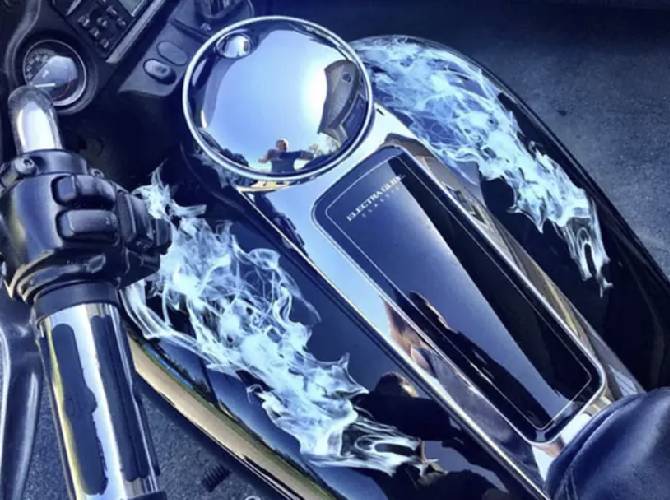
The Surface Is a Different Animal
Car doors and van panels are, comparatively speaking, forgiving. They’re large, relatively flat, and give installers room to work. Motorcycle surfaces are the opposite.
Gas tanks, fairings, and fenders feature compound curves, surfaces that bend in multiple directions simultaneously. Wrapping these correctly requires aggressive heat application to stretch cast vinyl around tight contours without wrinkling or lifting, a narrower margin for error when heating (since overworking vinyl damages it and underworking it causes failure), and strategic seam placement on surfaces that may only measure 12 to 18 inches across. Textured plastics, vented panels, and non-smooth areas all need proper preparation before vinyl ever touches the surface.
This is why cast vinyl, the same premium 3M and Avery material we use across our vehicle wraps, is non-negotiable for motorcycle work. Calendared vinyl simply doesn’t have the conformability these surfaces demand.
Find out how a high-quality wrap can protect your motorcycle.
Disassembly Is Part of the Process
Here’s something most wrap content glosses over: professional motorcycle wraps almost always require partial disassembly of the bike. Fairings, side panels, gas tanks, and fenders typically need to come off so edges can be wrapped fully and seams stay hidden once everything is reassembled.
This is a major difference from standard vehicle wraps, where the car or truck stays intact throughout installation. On a motorcycle, your installer needs to understand how the bike comes apart and how to put it back together correctly. That’s not a general vehicle wrapping skill. It’s a qualification worth asking about before you commit to a shop.
Cost Doesn’t Scale Down the Way You’d Expect
Motorcycles are smaller, so wrapping them should cost significantly less than a car wrap, right? Not quite.
Material costs are lower, yes, but labour intensity is comparable or higher. The precision required on small, complex panels, combined with disassembly time, keeps the cost closer to a standard vehicle wrap than most people expect. Understanding that going in sets the right expectations.
For business owners, the ROI calculation is also different. Lower billboard surface area than a full van wrap, but higher visual novelty. Unique visibility at bike nights, rallies, trade events, and in traffic, where a wrapped motorcycle turns heads in ways wrapped vans simply don’t. A branded motorcycle also reaches communities that commercial vehicle wraps never touch, putting your name in front of an entirely different audience.
For individual riders, the protection value is real. Wrapping preserves original paint from road debris, UV damage, and chips, which matters significantly for resale value on a premium bike.
Learn all about the benefits of custom motorcycle wraps.
Design Strategy Has to Adapt
What works visually on a 15-foot van panel can become cluttered chaos on a motorcycle tank. Smart motorcycle wrap design accounts for a few key differences.
Viewing Angles
Motorcycles get viewed from above at intersections, up close at events, and from every side in motion. Designs need to hold up from 360 degrees, not just the broadside profile that car wraps are typically optimized for.
Scale and Simplicity
Bold, clean graphics outperform intricate designs on small panels. The goal is impact at a glance, not detail that disappears at speed.
Integration With Existing Elements
Unlike wrapping an entire vehicle, motorcycle wraps often live alongside chrome, carbon fibre, exposed hardware, and engine components. The design has to work with those elements, not fight them. This is where custom templating, built specifically for each bike model, separates quality work from generic output.
Edge Sealing Matters More Here
Motorcycles face more direct exposure to wind, rain, and road debris than most vehicles, and that makes edge sealing critical. Edges that aren’t fully wrapped around or properly primed and sealed will lift faster on a bike than on a sheltered vehicle panel. A thorough installation accounts for this from the start. It’s never an afterthought.
The Bottom Line
Motorcycle wrapping delivers the same protective and visual payoff as standard vehicle wrapping, but it demands more from the installer at every step: more precise cutting, more skilled heat work, more knowledge of the machine itself, and more deliberate design thinking. The techniques are related, but the expertise required is a genuine step up.
If you’re ready to make a bold statement on two wheels, whether that’s protecting a personal ride or putting your brand in front of a new audience, give us a call at 604-996-6389. Let’s talk about what your bike could look like wrapped right.