


How Printing Resolution Affects Your Wrap’s Final Look
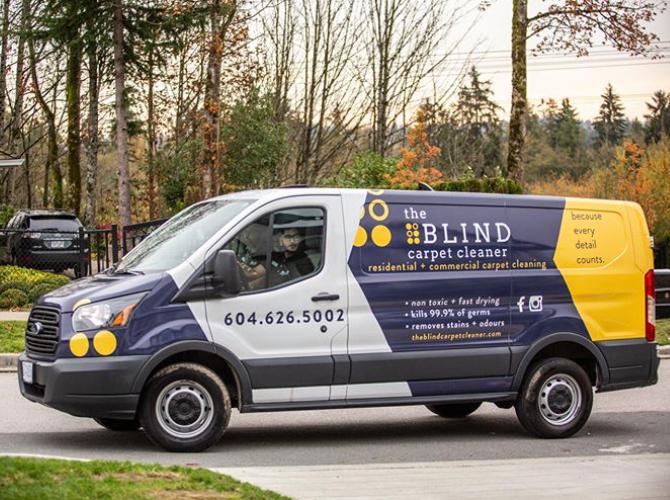
At Wrap Guys, we know that a vehicle wrap isn’t just a decoration; it’s a rolling billboard, a lead generator, and often the first impression your brand makes on a potential customer. That’s exactly why printing resolution affects your wrap’s final look more than most business owners realize. Get it right, and your logo looks sharp at 60 km/h. Get it wrong, and your phone number becomes a pixelated blur that nobody can read, let alone call.
What Resolution Actually Means on a Large-Format Print
Resolution describes the level of detail packed into a printed image. In large-format printing, this is typically measured in dots per inch (DPI). Higher DPI means more detail, sharper edges, and cleaner colour transitions.
Here’s where vehicle wraps differ from standard print jobs: a wrap is designed to be read from a distance, often while both the viewer and the vehicle are moving. That changes the resolution math considerably.
Large background graphics and solid colour fields can work well at lower resolution because viewing distance compensates for the reduced detail. Logos, text, and contact information need higher resolution because these elements have to stay legible whether someone’s standing next to your van or reading it from across an intersection. Fine lines and gradient transitions are the most unforgiving elements in any design, revealing resolution problems faster than anything else in the file.
The goal isn’t maximum resolution across every inch of the wrap; it’s the right resolution in the right places.
What Happens When Resolution Falls Short
We’ve seen it all in 25 years, and low-resolution artwork is one of the most common reasons a wrap looks cheap despite a quality installation. The problems are predictable and, unfortunately, visible.
Pixelation produces blocky, jagged edges on logos and text, making your brand look unprofessional before you’ve even said a word. Detail that looked fine on screen becomes soft and undefined when scaled up to vehicle size. Gradients that should fade smoothly from one colour to another show up as visible stripes instead. And a phone number or website URL that can’t be read from the road isn’t generating leads. Full stop.
A pixelated wrap doesn’t just look bad; it actively works against the marketing investment you made. That’s the real cost of cutting corners on artwork quality.
Find out how wrap design influences customer perception.
Why Source File Quality Is the Starting Point
No printer in the world can add detail that doesn’t exist in the original file. This is one of the most important things to understand before any wrap project starts.
Logos pulled from websites are built for monitors, not large-format printing. Scale them up for a vehicle wrap and every limitation in the file becomes visible. Compressed formats like JPEG degrade further when enlarged, introducing both blurriness and compression artifacts. Raster images without vector equivalents are resolution-dependent by nature, and pushing them beyond their native size drops quality fast.
Vector-based artwork sidesteps all of this because it’s resolution-independent. It scales to any size without losing quality. Our in-house design team works with vector files whenever possible and can recreate logos and graphics at the correct specifications when clients only have lower-quality assets on hand. You don’t need to arrive with a perfect file. You just need to work with people who know what to do when you don’t.
How Professional Printing Equipment Completes the Picture
Even with perfect source files, print quality depends heavily on the equipment doing the work. Commercial-grade large-format printers deliver consistent colour across large surfaces, so your brand colours look the same on the driver’s door as they do on the rear panel. They preserve the edges and fine lines that make a logo recognizable, and they lay down the ink saturation needed for outdoor durability. A wrap printed with insufficient ink density will fade unevenly long before its time.
Our advanced printing equipment works in combination with premium 3M and Avery vinyl materials, both of which are engineered to hold detail and colour through years of outdoor exposure. The material and the print quality reinforce each other. One without the other is a compromise.
Find out why exotic car wraps require specialized installation expertise.
You Shouldn’t Have to Think About DPI
Most business owners shouldn’t need to know what DPI stands for. What you should know is whether your wrap provider has the design expertise to catch resolution problems before they reach the printer, and the production capabilities to deliver a final product that makes your brand look like the investment it is.
Our in-house design team handles resolution optimization as a standard part of the production process. Sharp, professional results aren’t the exception around here. They’re what we show up to deliver every time.
If you’re ready to put a wrap on the road that generates attention and holds up for years, let’s talk. Reach out to our team at 604-996-6389 and let us show you what a properly built wrap looks like from concept to installation.